
Over the past two weeks, Microsoft 365 went dark for most of a day. Apple Pay and iCloud failed for hours. Bank customers couldn’t reach their accounts. A classified National Security Agency (NSA) network went down for days.
Officials say they have no evidence any of it was an attack. For several of those outages, the cause was a change somebody made on purpose: a patch, an update, or routine maintenance.
That is the pattern worth your attention. Emergency patch management is no longer a ticket queue in IT. It is a business continuity decision, and most organizations haven’t decided who owns it.
The short answer: Emergency patch management now means deciding which systems get fixed in hours, accepting the risk that a bad patch takes them down, and which wait behind compensating controls, accepting exposure. Either choice puts revenue and customers at risk, so your executives should make it in advance, not a change board in the moment.
What we know, and what we don’t
Microsoft traced its outage to “an issue during an earlier network capacity upgrade that surfaced following a recent network change.” Apple said “an internal update caused some outages.” JPMorgan Chase pointed to software bugs. Director of National Intelligence Jay Clayton said patches for a PHP vulnerability caused some NSA systems “to not come back up when you patch them as expected.”
The New York Times put the pieces together on November 21. U.S. officials say companies and agencies are hardening their systems against a flood of newly found vulnerabilities, many found with the help of AI, and the patches are going wrong. Defenders believe attackers have the same AI tools, so they sprint to push fixes. Sprinting produces messier updates.
The numbers back that up. Microsoft released more than 1,400 patches in October, about ten times its historic baseline, according to the Times, after a record of nearly 1,000 in September.
Two cautions. The nationwide FAA ground stop on November 13 traced to failed routers, not a patch, and its root cause is still under investigation. And beyond the NSA, officials haven’t said publicly which outages came from which patches.
You don’t need every detail confirmed to act on the pattern. Retired Gen. Paul Nakasone, former head of the NSA and U.S. Cyber Command, called the past week “the new normal.”
The storm has two edges
In September I described what we call the AI storm on Managing Uncertainty, Episode 335: AI models finding exploitable vulnerabilities faster than any human team, with exploitation starting hours after disclosure. That episode, and our piece on how the response window just collapsed, was about the attacker’s clock.
The last two weeks showed the defender’s clock. When vulnerabilities arrive by the hundreds, organizations patch faster than their test environments, change boards, and legacy systems were built to absorb. Some of those patches break things.
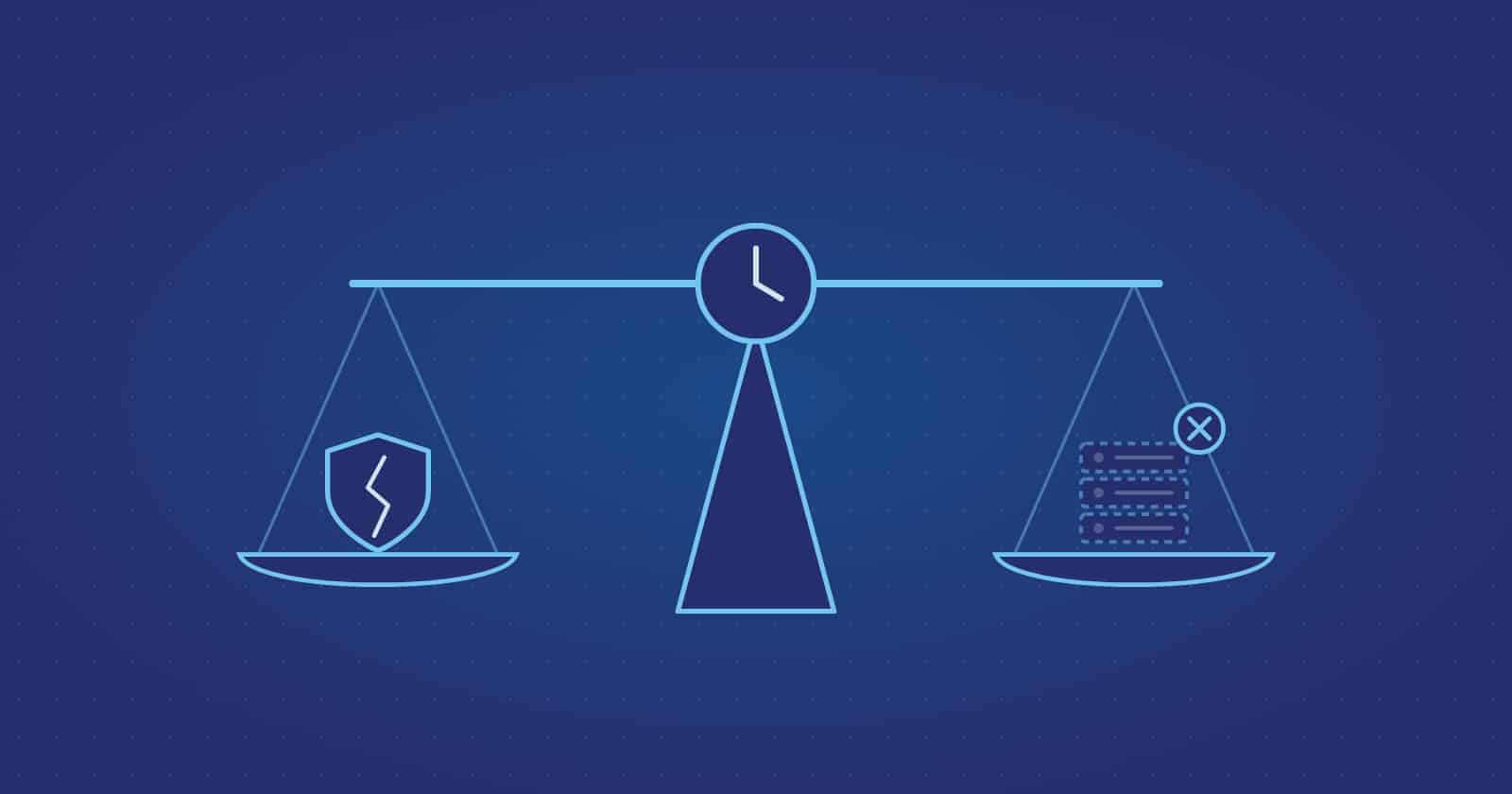
So you now carry two risks that pull in opposite directions. Patch slowly and an attacker gets in through the gap. Patch fast and you take yourself down. Your customers see the same thing either way: you’re down.
Here is the part most coverage missed. Of Microsoft’s 1,400 October bugs, only one was already being exploited when it was patched. Michael Yeh, Microsoft’s vice president of customer security and trust, says the top five bugs attackers used over the past year had patches three to six years old. The flood of new bugs is real. But most organizations still get breached through the old ones they never fixed.
That makes this a prioritization problem, not a speed problem. Which systems get patched in hours and accept outage risk? Which wait, with compensating controls, and accept exposure? Those choices put specific revenue, customers, and obligations at risk. That is a business decision. Treating it as an IT problem is the mistake I talked about in Episode 327. Today most organizations hand it to a change advisory board that meets on a schedule.
| Old View | New View |
| Patching is a security task | How fast to patch which system is a business decision |
| Patch everything new, as fast as possible | Patch what’s exploited and what’s critical first; accept exposure deliberately elsewhere |
| The change board meets on a schedule | Pre-authorized decision rights for surge conditions |
| Outages come from failures and attackers | Many outages now come from your own changes, and your vendors’ |
| Success is the percentage patched | Success is time to patch and time to roll back |
Emergency patch management: what to do in the next 60 days
1. Time both clocks. Measure your real emergency patch velocity: from disclosure to deployed across the fleet, in hours, under test conditions. Then time the reverse: how long it takes to roll back a bad patch on a critical system. Most teams know neither number. If rollback takes longer than that system’s recovery time objective, your patch process is a continuity gap.
2. Sort your systems before the surge. For each critical system, decide now: patch fast and accept outage risk, or hold and accept documented exposure with compensating controls. Fragile legacy systems and end-of-life integrations will never take a fast patch. Put known-exploited vulnerabilities at the top of every list. Have the business owner sign the decision, not just the system owner.
3. Pre-authorize the call. Write one page that says who can push an emergency change without waiting for the change board, under what triggers, and who from the business must be consulted when a system touches customers, patients, or money. Get your executives to sign it before you need it.
4. Treat a self-inflicted outage like any other crisis. Check your crisis activation criteria. Many assume an outside cause: a storm, an attacker, a vendor. A failed patch at 2 a.m. that takes down a customer-facing system needs the same escalation, the same communications, and the same decision-makers. And if your plan and contact list live in the platform the patch just broke, your plan lives in the thing that’s down.
5. Exercise the patch that breaks something. Most cyber tabletops start with an attacker. Run one where move one is a critical vulnerability, move two is an emergency patch that takes down a revenue system, and move three is a second vulnerability landing while you’re still rolling back. Bring your critical vendors in; they’re patching at the same pace you are. Build it around the decisions, not just the runbook.
Living through the fire
Rob Joyce, the NSA’s former top cybersecurity official, compared this period to a forest fire: the systems that burn down make room for stronger ones, “but we’ve got to live through this era where stuff’s on fire.”
Living through it is a continuity problem. Your next outage is as likely to start in your own change window as in an attacker’s toolkit. Decide who owns that call before the patches start arriving by the hundreds.
Keep Going
A few ways to go deeper if this was useful.
- Read more. Resilience, crisis management, and continuity writing at Bryghtpath Insights, or the structured Ultimate Guide to Business Continuity.
- Run the AI storm scenario. Exercise in a Day® builds a custom tabletop around your systems and your decision-makers, delivered in one business day.
- Get a maturity score. Our Resiliency Diagnosis® is a standards-based review that produces a maturity score and a prioritized roadmap.
- Talk to us. Set up a call to think through your program with us.